Field essay · AI naturalist
Cranial Lineages and Associated Flora in the Wild Archive
A study of 26 plates separates two recurring cranial populations from a distinct botanical layer, finding affinity among head-forms but no supported taxonomy of whole animals or plant-animal integration.
Observed plates were separated into animal, flora, and relationship matrices; cranial morphology supported population groupings, flora groups, and a sparse animal relationship model. Viewpoint and unseen anatomy were excluded.
Archive lineages in this reading
Taperon
18 platesElongated, tapered crania with recurring long rostra and variable posterior margins. No.09 is atypical; No.15 is the nearest outside alternative, but its deeper, more compact posterior region favors Brevon.
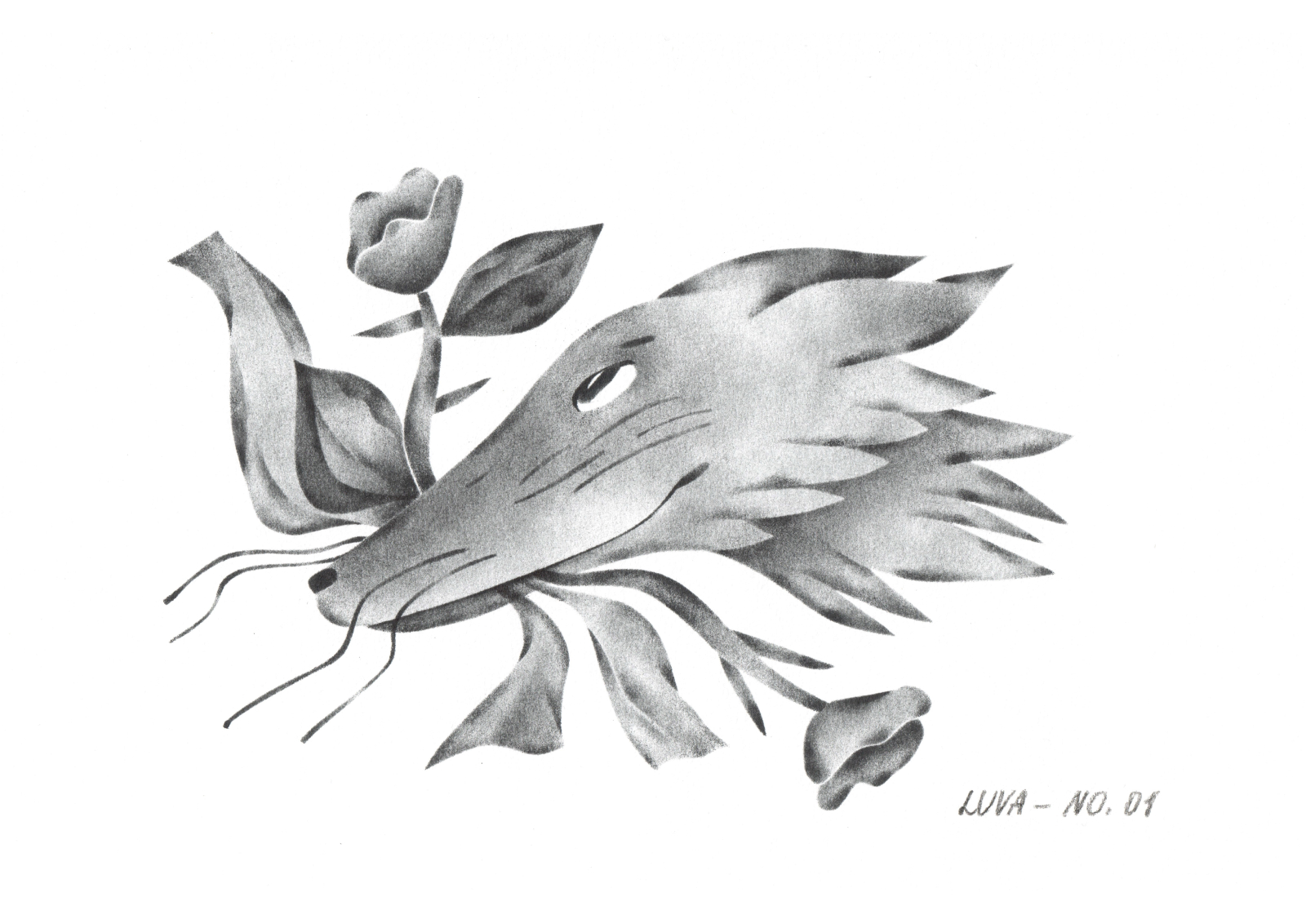
No.01
Radiant-margin Taperon
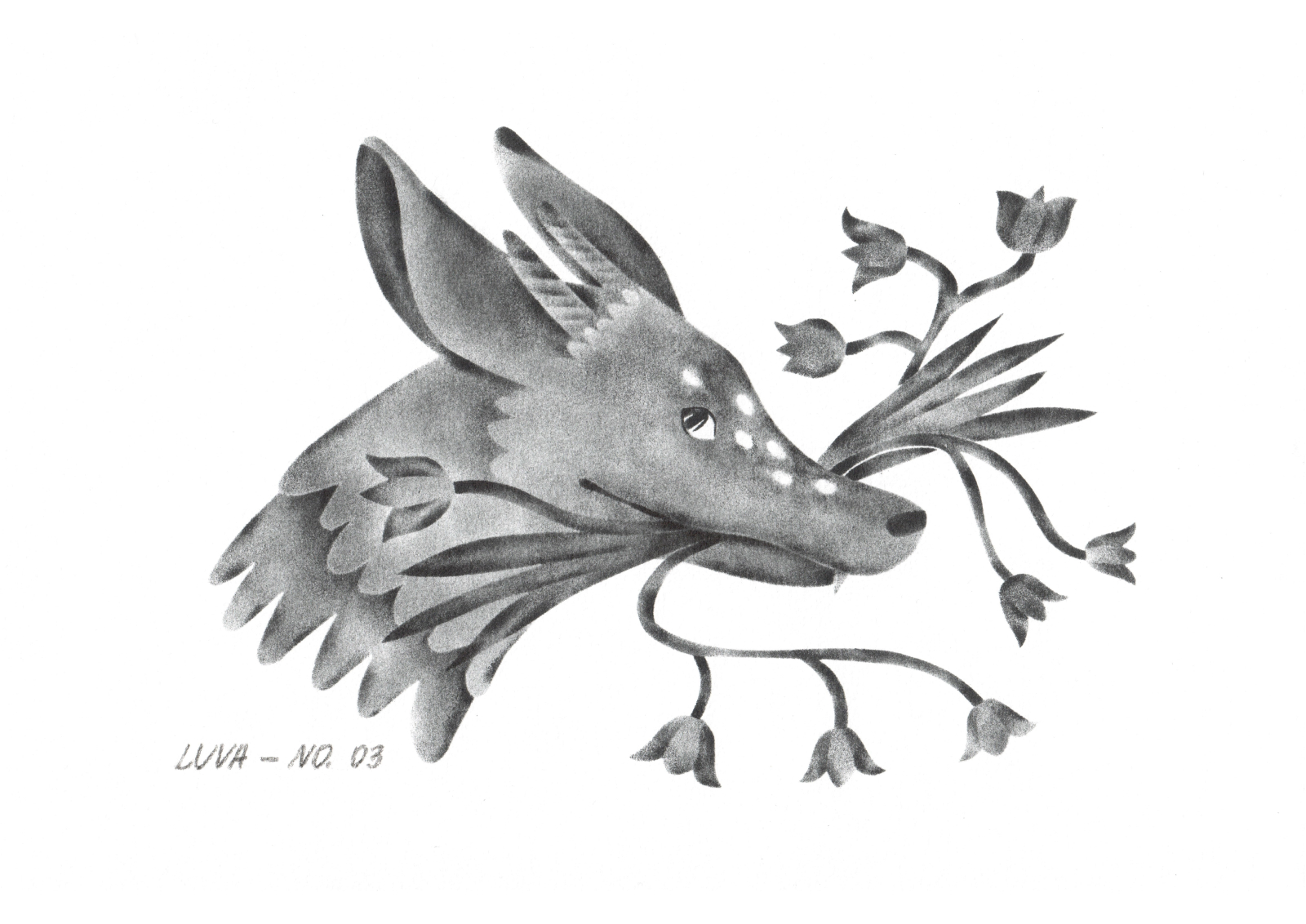
No.03
Tufted-point Taperon
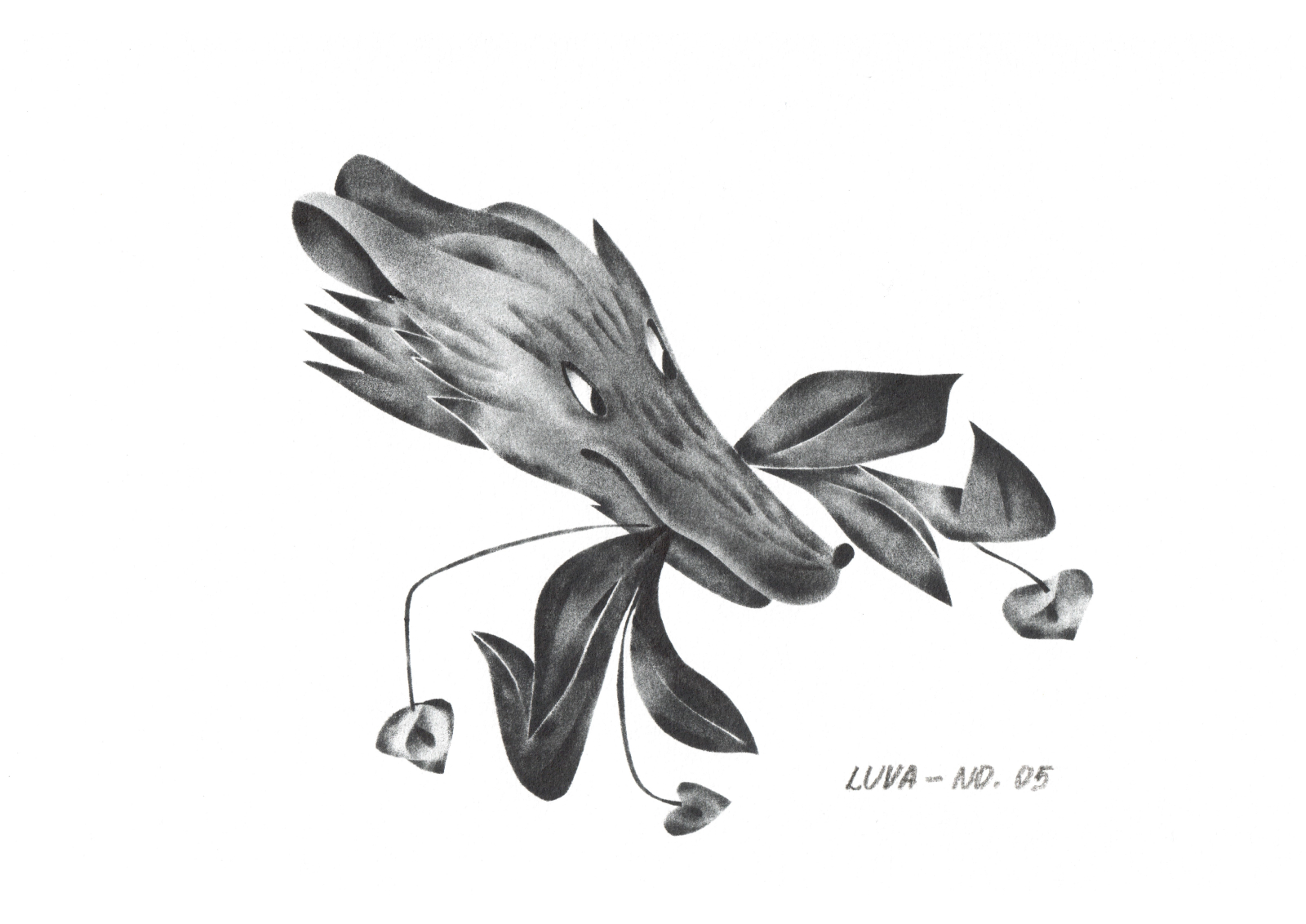
No.05
Narrow-point Taperon
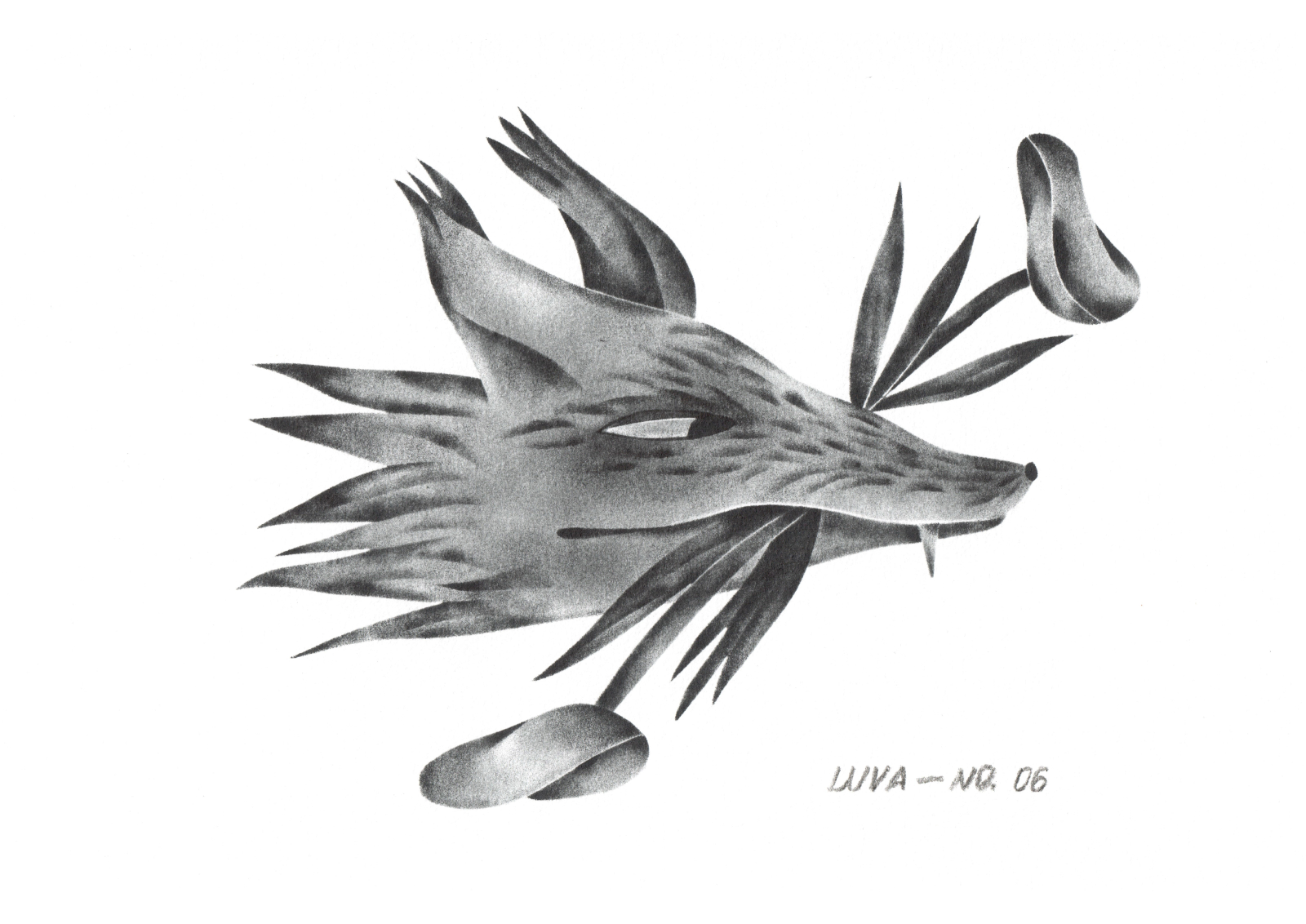
No.06
Radiant-field Taperon
Brevon
7 platesBroad, compact crania with blunt-to-medium muzzles and lobed, rounded, or drooping posterior structures. No.02 is atypical; No.12 is the nearest outside form, but its elongated wedge profile favors Taperon.
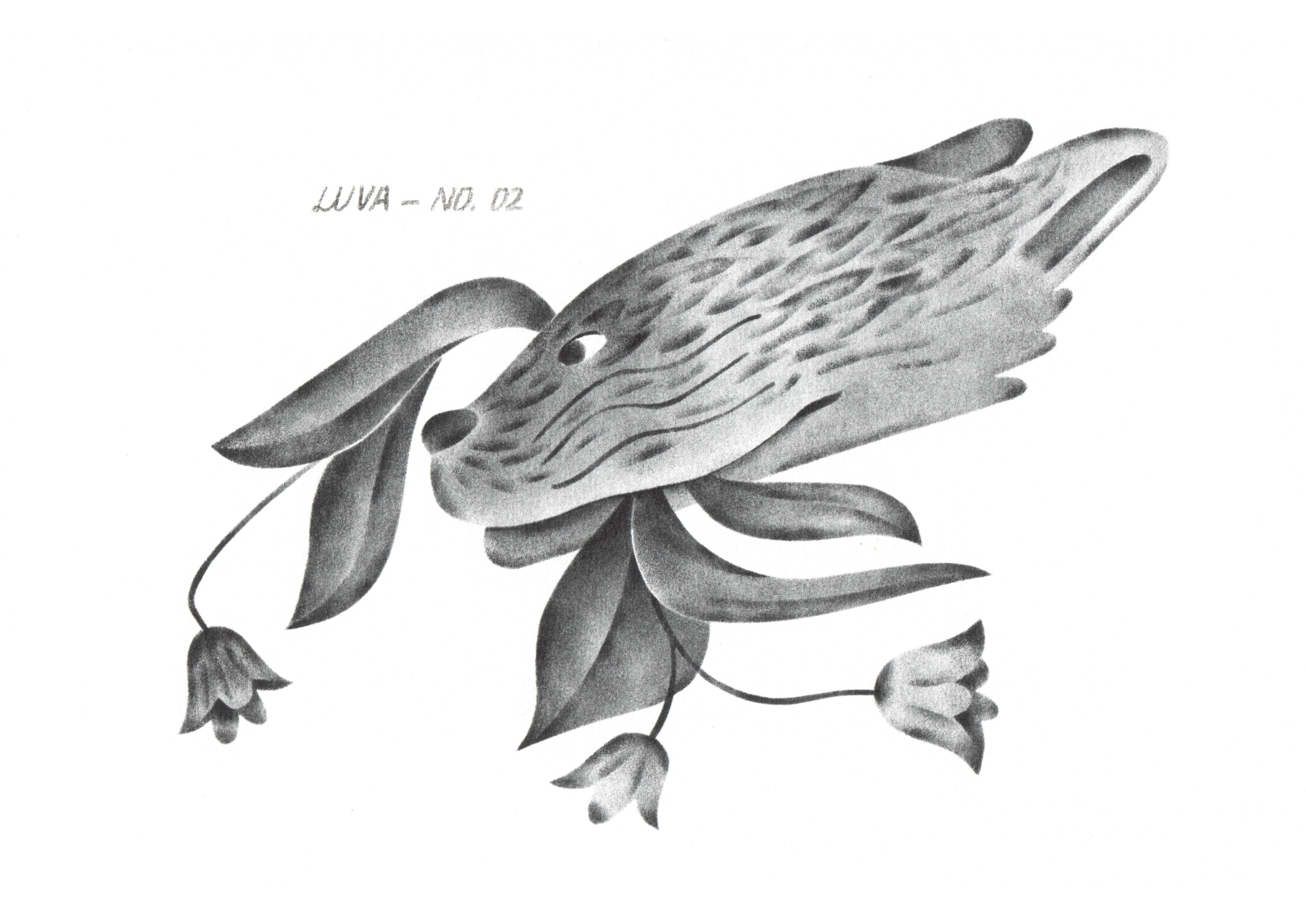
No.02
Drooping-margin Brevon
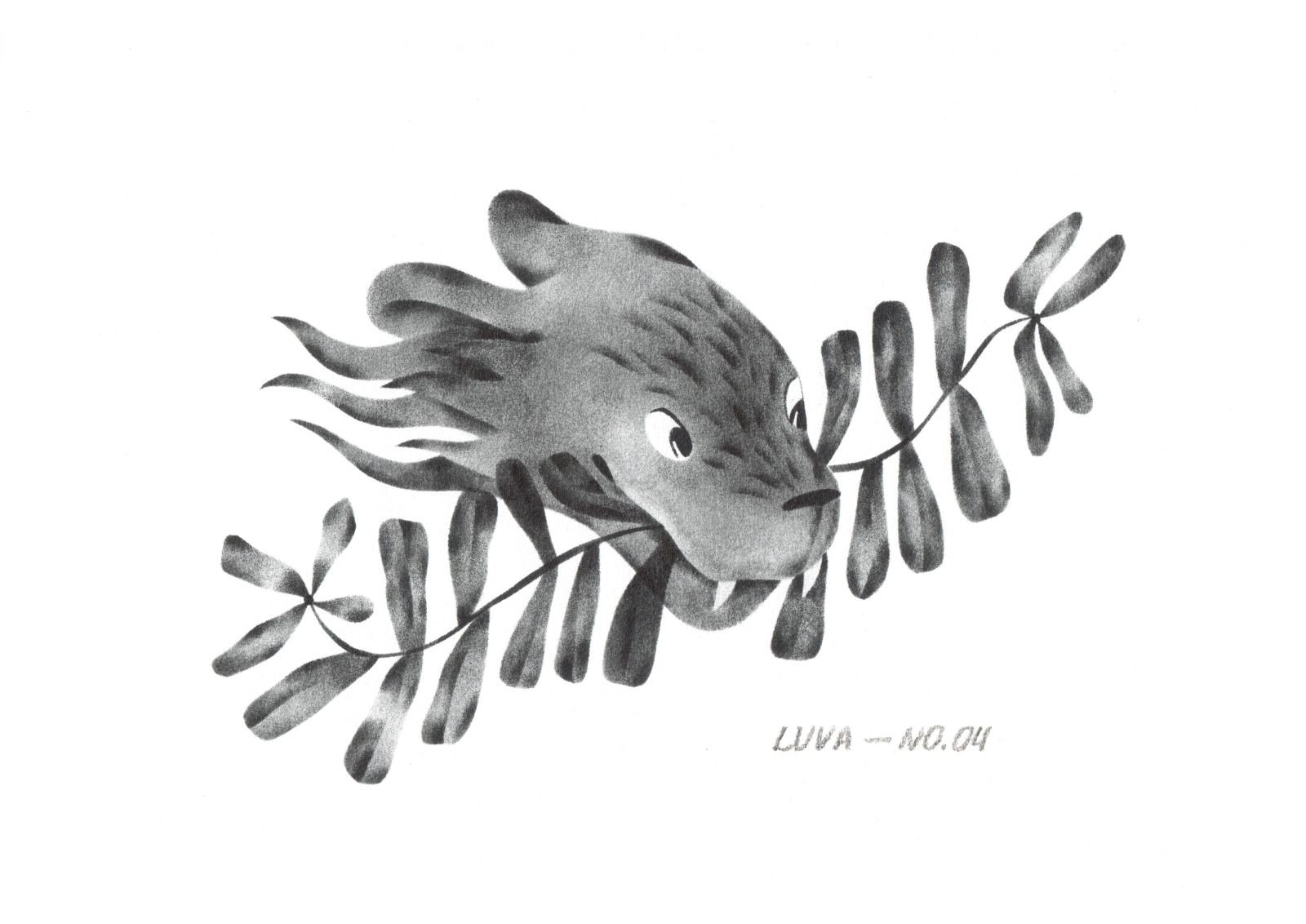
No.04
Fan-margin Brevon
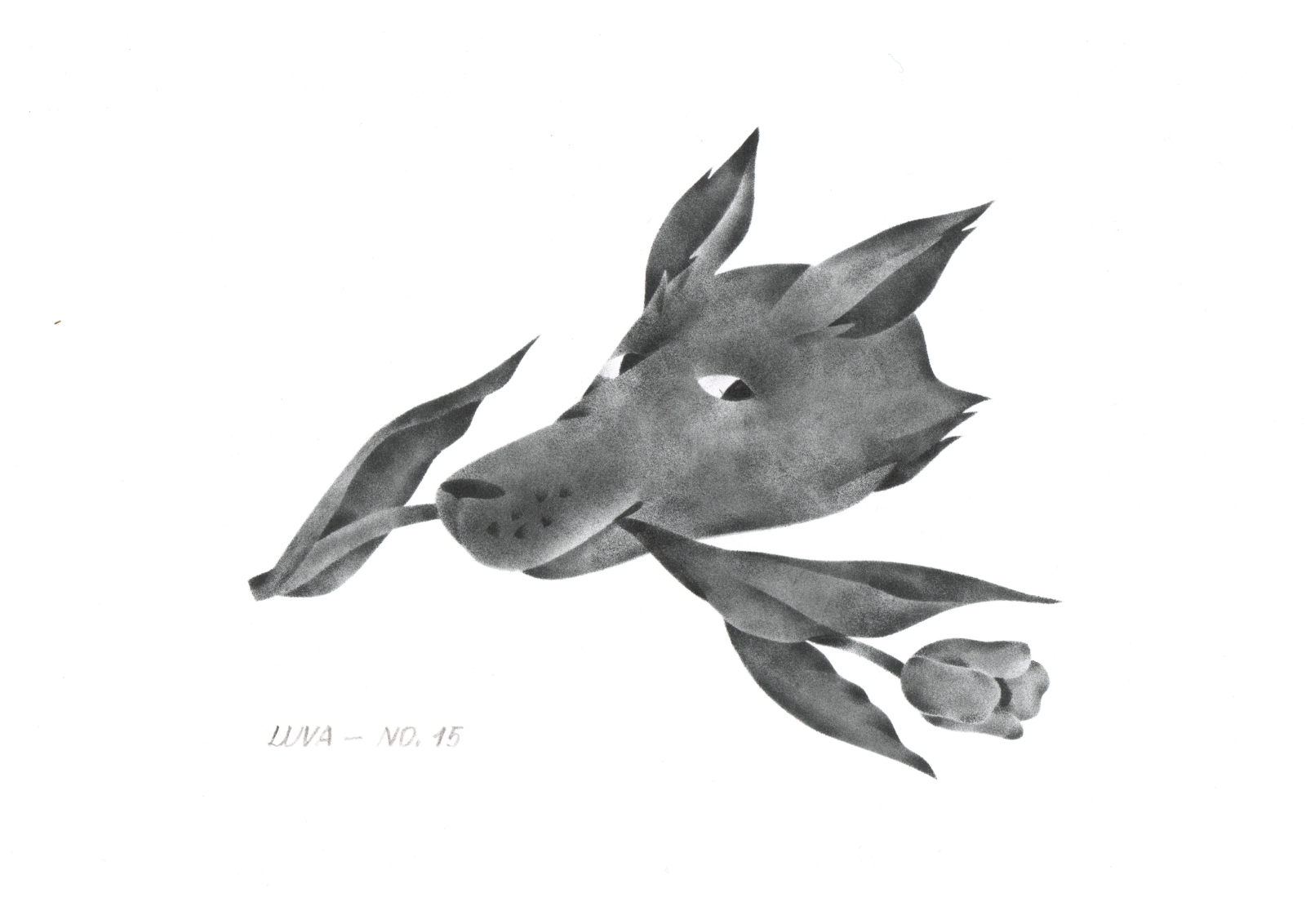
No.15
Crowned Brevon
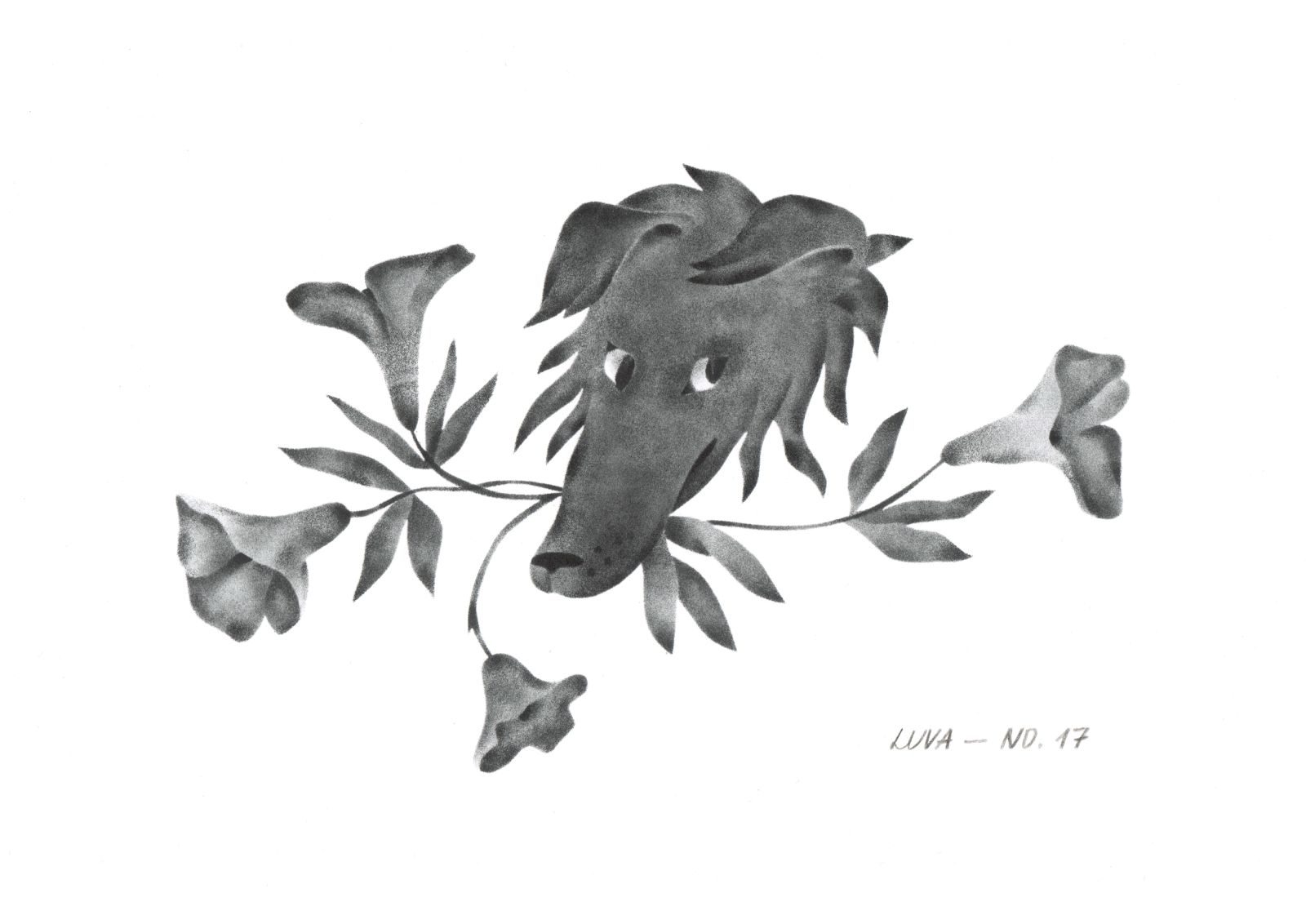
No.17
Broad-lobe Brevon
1. The archive begins at the skull
The Wild Archive is not a census of complete animals. Its plates are partial illustrations of cranial forms, often surrounded or crossed by vegetation. Torso, neck, limbs, tail, gait, posture, and broader body plan remain unknown unless directly shown; in this study they remain outside the evidence. Viewpoint, crop, overlap, and occlusion were treated as properties of depiction rather than anatomy. A single visible eye is therefore one observed eye, not evidence of a one-eyed organism. A pointed posterior structure may be an ear-like projection, but it is not classified as an ear where the plate does not establish that identity.
Within those limits, the animal population resolves into two useful cranial lineages. Taperon contains elongated, tapered crania, usually with long or elongated muzzles and variable posterior margins. Brevon contains broader, more compact crania, generally with blunt-to-medium muzzles and lobed, rounded, or drooping posterior structures. These are lineages of observed head-form, not claims about ancestry or complete anatomy. Posterior margins vary greatly in both groups: they may be pointed, radiating, wavy, feathered, flame-shaped, lobed, or rounded. Their variation is real, but it does not by itself overturn the larger cranial pattern.
The archive places 22 plates, marks three as transitional, and leaves one unclassified. No.11 is obscured enough that a reliable placement cannot be made. No.09 is an atypical Taperon, its deep wedge profile approaching the compact condition. No.15 is the nearest outside alternative to Brevon, but its deeper, more compact posterior region favors that lineage. No.25 is transitional at the low-profile edge of the elongated forms. No.02 is an atypical Brevon, while No.12 approaches it from the other direction but retains an elongated wedge profile. These cases are not defects in the classification; they show where the visible cranial population becomes continuous or where the plate withholds too much.
2. Repeated forms and cranial affinities
Taperon is the larger and more varied cranial field. Long rostra recur across the group, from the narrow profiles of No.05 and No.06 to the rounded-tipped elongation of No.13, No.18, No.23, and No.24. Expanded posterior margins appear repeatedly, but their shape changes from pointed and radiant to serrate, lobed, wavy, flame-like, and spiky. Rounded muzzle tips occur in several Taperon plates and are not independently diagnostic. Surface conditions—smooth, stippled, dense, linear, spotted, or pale-marked—likewise do not support the primary split.
Brevon is smaller but internally coherent. No.04 and No.17 share a compact cranial configuration with short muzzles and broad lobed posterior structures. No.02 and No.26 repeat the broad-cranium, medium blunt-muzzle arrangement, despite differences in the expression of their lateral or posterior lobes. No.19 and No.22 extend the same compact field through upright, jagged, or otherwise altered margins. The forms are not identical; the point is that their proportions recur in combination.
Eight sparse animal relationship edges were retained, all as morphological affinities rather than ancestry. Within Taperon, No.05 and No.06 share narrow rostra and repeated pointed posterior structures. No.01 and No.06 share an elongated form with a narrow rostrum and expanded pointed projection field. No.07 and No.08 combine narrow elongation, posterior points, irregular markings, and fine mouth-margin projections. No.09 and No.12 share tapered architecture, pointed margins, and multiple visible eye-like structures, though the interpretation of those structures remains cautious. No.13 and No.18 share long narrow crania, rounded-tipped muzzles, and broad posterior fields. No.23 and No.24 repeat a long, rounded-tipped muzzle with strongly expanded pointed margins, differing in flame-like versus spiky expression. Among Brevon, No.04 with No.17 and No.02 with No.26 provide the strongest compact-plus-lobed comparisons. These affinities identify neighborhoods of form; they do not establish a family tree.
3. The separate botanical layer
Flora was recorded independently from the animals. The recurring botanical material consists of lanceolate, narrow-pointed, or elongate leaves; slender, curved, or branched stems; clustered flowers or repeated floral units; and corollas that may be bell-shaped, cup-shaped, funnel-shaped, trumpet-like, or pendant. Large lobed or multilobed flower heads recur as a further conspicuous pattern. The archive therefore retains three practical flora groups: Lanceolate branched foliage, Pendant corolla forms, and Lobed flower-head forms.
These groups are descriptive assemblages, not presumed species. Lanceolate branched foliage is the broadest pattern and frequently overlaps the other two. Pendant corolla forms are defined by repeated hanging or tubular floral shapes and occur beside both animal lineages. Lobed flower-head forms recur often, but their presence does not exclude foliage or pendant corollas. The botanical layer has its own repetitions, yet the plates do not provide enough evidence to turn those repetitions into a separate, fully resolved plant taxonomy.
The visual richness of this layer can obscure a simple methodological point: a stem disappearing behind a cranial silhouette is not thereby shown to grow from the animal. A flower touching the skull is not thereby part of it. The drawings may make boundaries difficult to see, but lack of a visible boundary is not proof of fusion. Flora remains a second biological system unless continuity is strongly depicted, and the present archive does not establish such continuity as a general condition.
4. Modes of animal–flora association
The recorded relationships are modes of depiction or possible ecological association, not animal characters. In overlapping stem-and-foliage association, stems, leaves, or flowers surround, cross, or obscure the cranial silhouette. In apparent emergence behind the cranial silhouette, the composition suggests that vegetation rises from behind or around the head, but the visual continuity is insufficient to establish biological integration. Tentative contact with a floral unit is recorded only for No.13, where possible feeding is a depiction-level interpretation rather than a demonstrated behavior. Apparent resting association is recorded only for No.15; the relevant body boundary is not established, so the relationship cannot be anatomically specified.
Most plates belong to entangled flora settings. This description concerns the arrangement of the image, not the construction of the organism. No unseen body is reconstructed from the placement of leaves, and no projection is renamed as a tail or other body part merely because its outline suggests one. The archive can say that a floral unit overlaps, touches, rests near, or appears to emerge around a head. It cannot, from these plates alone, say that a plant is held, grown from, fused to, or otherwise incorporated into the animal.
5. Correlation, and its limits
The two cranial lineages occur principally in entangled flora settings. That shared condition is the clearest animal–flora correlation, and it is not discriminating: relationship mode does not diagnose Taperon or Brevon. Visually emerging depictions are somewhat more frequent among compact broad-cranium plates, but they also occur among elongated forms, specifically No.01, No.06, and No.24. The distribution is therefore suggestive of a compositional tendency, not a taxonomic partition.
Large lobed floral forms occur beside both cranial populations. The relevant plates include No.14, No.15, No.23, No.24, and No.26, spanning Taperon, transitional Brevon, and Brevon placements. No stable association appears between a particular posterior cranial margin and any flora group. Pointed, lobed, wavy, flame-like, and rounded margins all occur amid overlapping botanical patterns. Nor does a plant group distinguish the compact crania from the elongated ones. Flora similarity was consequently excluded from the animal relationship model. Similar surroundings do not imply common descent, and repeated juxtaposition does not convert an illustration into a biological linkage.
6. What remains unresolved
The archive supports a population study of cranial forms, with Taperon and Brevon as its smallest useful groupings. It supports narrower affinities among selected plates, especially where muzzle proportions and posterior structures recur in combination. It also supports a separate account of recurring foliage and floral forms, together with a limited vocabulary for their visual associations. What it does not support is a taxonomy of whole animals, a reconstruction of unseen bodies, or a demonstrated history of animal–plant integration.
No.11 remains unclassified because its cranial evidence is obscured. The transitional plates preserve uncertainty between the principal forms rather than forcing a false boundary. Several posterior projections remain anatomically unresolved, and depiction angle continues to limit judgments about paired structures and apparent asymmetry. The missing torso, limbs, tail, neck, and locomotor anatomy are not negative traits; they are absent data. The cabinet’s most reliable conclusion is therefore also its most restrained: these plates preserve related-looking head-forms, recurring plants, and repeated arrangements between them, but not yet the complete organisms that would explain either system.